
Selling 24 acres of timber in Frazeysburg, Ohio
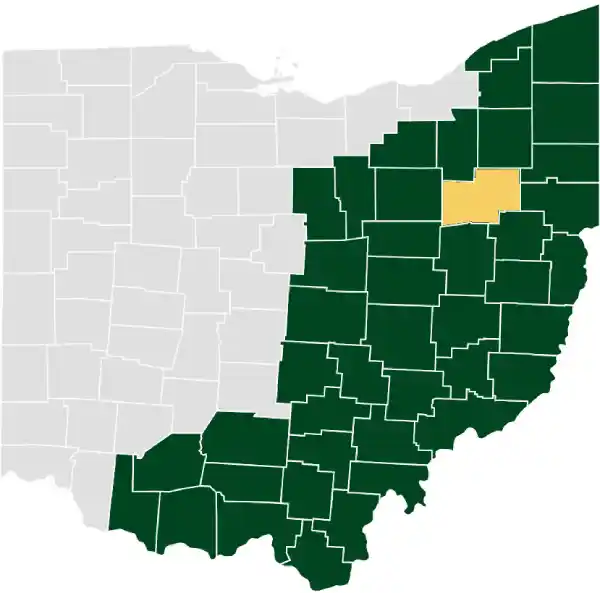
Learn how we got this landowner $24,994 for her timber sale in Muskingum County
Calling a consulting forester for guidance with a timber sale
In late Spring of 2025, a young woman who resides in Florida inherited a 60-acre parcel of timbered land near Frazeysburg, Ohio. Her father contacted us on her behalf for a consultation on the potential sale value of the timber on the property.
Her main objectives were to:
Harvest and sell enough timber to meet some upcoming expenses;
Create a timber stand improvement (TSI) plan to increase its future harvest potential;
Get help with wildlife habitat design to attract deer & game birds to the land.
Evaluating the timber’s potential sale value
When we cruised the property we found it held enough good timber on it to meet their current income objective. We prescribed a limited, selective harvest in only one section of the stand with plenty of mature trees.
Furthermore, doing the cut the way we recommended in this central area will open up wide areas in the forest canopy that will cause new tree saplings and native grasses to regenerate and take hold rapidly – making both great browsing fodder for whitetail deer and good cover for ground-nesting game birds, like ruffed grouse.
Note that we selected to cut fewer than ten trees per acre, and about half of all the timber on the property is outside the boundary for this low-impact harvest. That acreage is reserved to grow and continue maturing for a later harvest.
The owner and her father approved the plan and retained us to do the work to sell the timber for them. The harvest plan is shown on these maps. Click either map to enlarge it.


The aerial map shows a yellow line marking the property’s boundary. The red line shows the boundary enclosing the area of the harvest. The blue line shows where we want the skidding road to be built. The blue circle marks the parking area for logging equipment. The purple triangle marks the log landing or staging area.
The topographical map shows the same markings on the parcel, but also its underlying terrain. This allows the loggers we invited to bid on the timber to ascertain the difficulty of the harvest in advance, which in this case is low.
Selecting mature timber to sell
We marked 202 mature trees for harvest this time, with a final tally of 55,007 board feet, measured on the Doyle Scale and in Form Class 78. This table shows the full inventory of each to be harvested, classified by species.
| Species | Trees | Total BFV | % of BFV | Avg DBH |
|---|---|---|---|---|
|
Beech |
3 |
645 |
1.5 |
22 |
|
Aspen |
2 |
450 |
<1 |
20 |
|
Black cherry |
2 |
459 |
<1 |
21 |
|
Black oak |
6 |
2,210 |
4 |
23 |
|
Black walnut |
8 |
1,842 |
3.3 |
19.7 |
|
Hickory |
6 |
1,868 |
3.3 |
21.7 |
|
Hard maple |
44 |
10,739 |
19.5 |
20.7 |
|
Red oak |
4 |
2,164 |
3.9 |
26 |
|
Soft maple |
6 |
1,346 |
2.4 |
26 |
|
Scarlet oak |
1 |
376 |
<1 |
30 |
|
Sycamore |
4 |
1,317 |
2.3 |
22.5 |
|
White oak |
4 |
787 |
1.4 |
19.5 |
|
Yellow poplar |
112 |
30,604 |
55.6 |
20.3 |
|
TOTAL |
202 |
55,007 |
100 |
20.7 |
BFV = Board Feet Volume, which calculates the amount of lumber potential in a stand
DBH = Diameter at Breast Height, which is the standard way to take this measurement
By no means is this the majority of the timber growing on the property. This is a careful selective harvest that preserves the aesthetics of the property, and improves the health and condition of the stand so that thousands of other trees there can continue growing to maturity.
Soliciting competitive bids for the timber
We prepared a Notice of Standing Timber Sale and sent it (with a full bid prospectus including all you see on this page) to 20 master loggers and sawmills who we know do good work, making minimal impact impact on forest floors, and do proper restoration.
All the loggers received notice of the sale on August 8, 2025 and were given 19 days to visit the property and satisfy themselves about the quantity, quality and accessibility of the timber offered for sale.
Sealed bids were due at our offices by noon on Wednesday, August 27, and we received five bids in these amounts:
Bids received for the timber
| Bid amount | $ per board foot |
|---|---|
|
$24,944 |
.453 |
|
$23,526 |
.427 |
|
$22,093 |
.401 |
|
$21,500 |
.390 |
|
$18,888 |
.343 |
The inventory in this sale was about 55% yellow poplar, and we sold it to salvage its value before it was destroyed by the mass mortality event affecting poplar trees in southeast Ohio. Because of the blight, the timber market was flooded with poplar and prices bid for it were low throughout 2025.
What happens after the sale
The seller accepted the highest bid and the logger has been notified that the contract has been awarded to his firm.
The winning bidder has 10 days from August 27 to sign the sale contract, and to pay the owner a non-refundable 35% deposit ($8,748) of the full sales price.
He will then be afforded sufficient time to schedule the work to be done. But he must pay the final 65% balance ($16,196) in full to the owner before he is allowed onto the land again to begin the harvest.
The contract has enforcement provisions to ensure that only the 202 trees we marked will be taken, and that the logger adheres to Ohio’s BMP Guidelines for erosion control and seeding of disturbed areas. And we will take and hold a performance bond of $10,000 and not release it until we are satisfied that restoration has been done correctly.
We will also file a Foresty Pollution Prevention Plan with the Muskingum Soil and Water Conservation District so that they can inspect the logger’s work too.
When and how the timber harvest will proceed
The harvest on this property will begin in mid-September and finish in about a week. We will oversee every aspect of the harvest, making multiple unannounced visits to inspect the site and ensure that the work is done correctly.
Throughout the harvest process, we will keep her apprised of its progress with video and photo documentation. She doesn’t have to take time away from work to travel to Ohio for anything.
Once harvest is completed our foresters will write a Woodland Stewardship Management Plan for the property. Once approved by the state forester for an official forest land designation, the property will be qualified to enter Ohio’s CAUV Program for timber production and the owner will enjoy a 50% reduction in property tax while growing more timber for harvest later.
We will also show the owner how to qualify her property for the Environmental Quality Incentives Program (EQIP) which offers financial and technical assistance to improve the wildlife habitat on her land.
This was a smaller sale than those we usually manage, but we were happy to help her out anyway. Follow this link to read about another Muskingum County timber sale we managed.
Key takeaways from this timber sale
- Top-dollar price obtained via competitive bidding
- Lower property taxes for growing more timber
- A hassle-free harvest with restoration guaranteed
- Landowner 100% satisfied
- Minimum: 10 wooded acres or 50 mature trees.